Thailand’s Supreme Administrative Court has ruled that former Prime Minister Yingluck Shinawatra must pay over 10 billion baht (approx. $305 million) in compensation for losses linked to her administration’s controversial rice pledging scheme—marking a major legal setback for the exiled leader and a defining moment in the long-running rice subsidy scandal. CNA + 4 nationthailand + 4 ABC News + 4 Wikipedia + 13 Reuters + 13 nationthailand + 13
The court partially overturned a previous verdict that had cleared Yingluck. It determined she had acted with “gross negligence”, particularly by ignoring repeated warnings issued by agencies such as the National Anti‑Corruption Commission and the State Audit Office about fraudulent G‑to‑G rice sales contracts. Reddit+3nationthailand+3nationthailand+3
Although the Finance Ministry initially demanded 35.7 billion baht ($1.1 billion), the court found that amount unjustifiably high. Instead, it ruled she should only pay half of the estimated damages, totalling ~20 billion baht, resulting in a more modest payout of 10.028 billion baht. ABC News+4nationthailand+4朝日新聞+4
Yingluck’s flagship policy—introduced in 2011—pledged to buy rice from farmers at prices roughly 50% above world market value, inflating costs and encouraging massive stockpiling. When global prices plunged due to competition from India and Vietnam, Thailand lost its position as a top exporter and was left with unsold, deteriorating rice, resulting in estimated losses of up to 170 billion baht (~$19 billion). Bangkok Wikipedia +8 AP News +8
From exile, Yingluck called the ruling unjust, maintaining she was being held liable “for a debt I did not cause”, emphasising her lack of direct involvement in operational decisions. Her legal team has vowed to appeal, citing past recovery of losses through rice sales and government funds used to offset the costs. nationthailand+11nationthailand+11AP News+11
This ruling has significant political resonance as the Pheu Thai Party, founded by her brother Thaksin Shinawatra, returns to power with his daughter Paetongtarn Shinawatra serving as prime minister. The decision underscores continuing tensions between the Shinawatra political network and conservative or military-aligned institutions. AP News+7 Reuters+7www.ndtv.com+7 At a Glance
| Item | Details |
|---|---|
| Court | Supreme Administrative Court, Thailand |
| Date of Ruling | May 22, 2025 |
| Original Compensation Order | 35.7 billion baht |
| Court-Imposed Payment | ~10.028 billion baht (about $305 million) |
| Reason for Liability | Severe negligence concerning G‑to‑G rice deals |
| Yingluck’s Status | Exiled in self-imposed exile since 2017 |
| Defense Stance | Claims no direct responsibility; political targeting |
The Thai court has ordered Yingluck Shinawatra to pay over 10 billion baht in damages for losses from a failed rice pledging program.
The ruling overturns a 2021 acquittal and slashes the original demanded amount from 35.7 billion to 10 billion baht, reflecting only half the assessed losses.
Yingluck rejects the verdict as politically motivated, while her legal team prepares to appeal based on losses already recouped and lack of direct operational control.

Navigating the Frontier of AI Tools and Automation: Challenges and Importance in Today's World

Demographic Shifts in the United States: A Changing Nation Over Time

Supreme Court Ruling on Presidential Immunity Sparks Nationwide Debate

Global Stock Markets Mixed Amid Inflation Worries and Earnings Reports

Tensions and Conflict Define Recent Months In the last few months, the global political landscape




Iran and Israel traded further air attacks on Thursday as President Donald Trump kept the world guessing about whether the United States would join Israel's bombardment of Iranian nuclear facilities. Google News LinkFor all latest news, follow The Daily Star's Google News channel. A week of Israeli air and missile strikes against its major rival has wiped out the top echelon of Iran's military command, damaged its nuclear capabilities and killed hundreds of people, while Iranian retaliatory strikes have killed two dozen civilians in Israel. Iran and Israel traded further air attacks on Thursday as President Donald Trump kept the world guessing about whether the United States would join Israel's bombardment of Iranian nuclear facilities. Guardian council warns US of 'harsh response A key Iranian body warned the United States on Thursday that any intervention in support of its ally Israel would be met with a "harsh response". "The criminal American government and its stupid president must know for sure that if they make a mistake and take action against Islamic Iran, they will face a harsh response from the Islamic Republic of Iran," the Guardian Council said in a statement carried by state television. Google News LinkFor all latest news, follow The Daily Star's Google News channel. A week of Israeli air and missile strikes against its major rival has wiped out the top echelon of Iran's military command, damaged its nuclear capabilities and killed hundreds of people, while Iranian retaliatory strikes have killed two dozen civilians in Israel. Guardian council warns US of 'harsh response' if it intervenes. A key Iranian body warned the United States on Thursday that any intervention in support of its ally Israel would be met with a "harsh response". "The criminal American government and its stupid president must know for sure that if they make a mistake and take action against Islamic Iran, they will face a harsh response from the Islamic Republic of Iran," the Guardian Council said in a statement carried by state television.



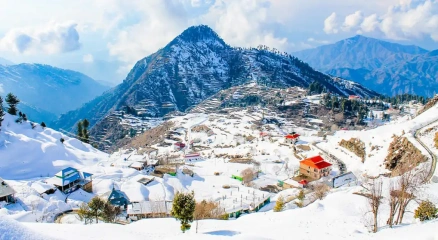
🇮🇳🇵🇰 The Water Dispute: What’s at Stake? India has formally declared that it will never restore the 1960 Indus Waters Treaty (IWT) with Pakistan, effectively denying Pakistan access to water from the western rivers—Indus, Jhelum, and Chenab. This water supplied approximately 80% of Pakistan’s agricultural irrigation, making the dispute existential for millions of Pakistanis. The Express Tribune +14, Reuters +14, Al Jazeera +14. India’s Home Minister Amit Shah stated that the water previously destined for Pakistan will instead be diverted to support Indian states like Rajasthan, framing past Pakistani usage as “unjustified”. Reuters+1 Al Jazeera+1. Can Pakistan Be Stopped From Receiving This Water? Under the treaty, Pakistan maintains usage rights to these rivers. However, India’s declaration to suspend, or hold the treaty in "abeyance"—a move not permitted under the treaty’s binding terms—has already led to reduced flows from the Chenab River, causing a reported 21% water deficit during the critical early Kharif season. A 7% shortfall is projected for late Kharif mint + 1. Indian Defence News + 1. Pakistan's Indus River System Authority (IRSA) has confirmed a significant drop in flows at major headworks, signalling immediate agricultural disruption across Punjab, Sindh, and other provinces mint+1 HindustanTimes+1. Experts argue that quitting or halting the treaty constitutes a serious breach of international water-sharing norms, and Pakistan has formally expressed concerns to the Permanent Court of Arbitration (PCA), accusing India of “weaponising water” and violating treaty obligations. The Times of India +6, Pakistan Today +6, Al Jazeera +6. Pakistan’s Political and Legal Response Prime Minister Shehbaz Sharif denounced India's actions as “water aggression, ”vowing a united national response to defend treaty rights. A high-level committee has been created to coordinate responses and accelerate new dam and storage infrastructure projects like the Diamer‑Bhasha and Mohmand dams. The Express Tribune. Senator Syed Ali Zafar warned Parliament that millions rely on the Indus Basin and that failing to act could lead to famine. He referred to India’s suspension as a “water bomb” that threatens Pakistan’s food security and sovereignty. The Guardian +5 Al Jazeera +5 The Times of India +5. Former Foreign Minister Bilawal Bhutto Zardari cautioned Pakistan against rising tensions, stating the water dispute could escalate into war and emphasising the illegality of India’s unilateral treaty suspension. Wikipedia+7 Anadolu Ajansı+7 The Express Tribune +7. Immediate Consequences and Wider Implications Area Impact Agriculture & Food Security Punjab, the country’s granary, is worst hit with a 21% shortfall in supplies during planting season; Sindh also faces deficits and potential desertification concerns. Hydrological Data & Planning Reduced transparency on upstream flows complicates Pakistan’s reservoir and flood management strategies. The Economic Times +15 Al Jazeera +15 The Times of India +15. Legal Outlook Pakistan has appealed to international tribunals and reaffirmed that unilateral treaty withdrawal is unlawful under customary international law. Pakistan Today, Al Jazeera. Domestic Infrastructure Push Pakistan aims to fast-track dam projects to build resilience, including the Diamer‑Bhasha and Mohmand dams, with portions of national development funding dedicated to water security. The Express Tribune. Outlook: How Pakistan Can Respond International Legal Action Pakistan is pursuing arbitration through international courts and reaffirming the binding nature of the IWT and the role of the Permanent Indus Commission. Anadolu Ajansı+15, Pakistan Today+15, Reuters+15. National Infrastructure Mobilization Emergency water management, new reservoirs, and revised irrigation distribution are being prioritised to cope with reduced inflows. Diplomatic Pressure Islamabad continues to mobilise international support and warn against viewing water denial as a military or existential threat. Hindustan Times, 9reddit.com, Wikipedia, 9New York Post, 15Anadolu Ajansı, and 15mint. Domestic Resilience Measures Diversification of water sources, promoting conservation, and exploring inter-provincial conflict resolution are part of broader resilience planning. In Summary: India has unilaterally suspended the Indus Waters Treaty, denying water access to Pakistan from western rivers. Pakistan is facing already measurable agricultural shortages and hydrological stress. While India claims legal rights over diverted water, Pakistan contests this through international legal channels and national infrastructure efforts. The situation remains highly tense, with both ecological and political consequences looming.



On a mission to record all of Ireland's bird species, many of which are dying out, Irishman Sean Ronayne calls his unique audio archive a tool to both raise alarm and bring hope. India has formally declared that it will never restore the 1960 Indus Waters Treaty (IWT) with Pakistan, effectively denying Pakistan access to water from the western rivers—Indus, Jhelum, and Chenab. This water supplied approximately 80% of Pakistan’s agricultural irrigation, making the dispute existential for millions of Pakistanis. The Express Tribune +14, Reuters +14, Al Jazeera +14. India’s Home Minister Amit Shah stated that the water previously destined for Pakistan will instead be diverted to support Indian states like Rajasthan, framing past Pakistani usage as “unjustified”. Under the treaty, Pakistan maintains usage rights to these rivers. However, India’s declaration to suspend, or hold the treaty in "abeyance"—a move not permitted under the treaty’s binding terms—has already led to reduced flows from the Chenab River, causing a reported 21% water deficit during the critical early Kharif season. A 7% shortfall is projected for late Kharif mint + 1. Indian Defence News + 1.